























History of Lightning Protection
History of Lightning Protection
Lightning is the discharge of electrical charges between both cloud-to-cloud and cloud-to-ground
or earth along a path of least resistance. In most cases, between cloud-to-ground it follows the
shortest course or path of least resistance, which makes buildings and tall objects the likely
targets of these powerful electrical charges. Normally, during an electrical storm the positive
charges are generated in the clouds, while the negative charges are generated in the earth below.
When these charges build in strength, the attraction to the positive and negative electrical ions
generates bolts of lightning. Lightning protection devices properly designed and installed, collect
and dissipate these charges and protect from catastrophic damage.
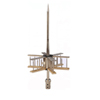
Lightning protection science was first conceived by Benjamin Franklin in 1749 with his invention
of the first pointed lightning rod conductor. It was also called a “lightning attractor” and
later was identified as the “Franklin Rod.” Franklin spent many years in the lightning protection
design process to include his famous kite experiment, which took place as he was waiting for
permission to test his theories on the new Christ Church structure in Philadelphia, PA. Although
Franklin did not patent any of his inventions, he published advice on lightning protection in Poor
Richard’s Almanac in 1753.
At that time, common belief was that lightning was a creation of God and therefore should not be
interfered with in anyway. Franklin finally was able to convince the church deacons that they
should take precautions against lightning damage by installing the lightning protection he
designed, citing that rain was also a creation of God but roofs were still used on buildings
to protect people and contents of buildings.
During the 19th century, lightning protection became an architectural addition to many public
and private structures. The overall pointed rod design was complimented with ornamental solid
glass balls, which were not only decorative but were believed to be an integral element in the
effectiveness of the lightning protection of the structure. The theory behind this addition
was that since glass is a non-conductor of electricity that they would repel the charge and for
a time, because of the erratic behavior of lightning it was believed this was scientifically proven.
Both the pointed design and the addition of the solid glass balls were soon proven by Nicola
Tesla to be a flawed lightning protection design. Tesla’s patented design was a great improvement
over Franklin’s original lightning protection of the pointed rod. In 1919, years after receiving
his patent, Tesla publish an article, “Famous Scientific Illusions” in The Electrical Experimenter
explaining the logic he used to dispel the science of Franklin's pointed lightning rod and scientific
knowledge he used to design his lightning protection device. In his article, Tesla proved that the
pointed tip of the iron rod actually ionized the air around it, which rendered it air conductive and
raised the probability of a lightning strike.
Over the decades, since Franklin and Tesla, there has been much progress in lightning protection
systems. Great innovations in design and methodology have advanced the protection of mission critical
systems for military and government operations and commercial applications. From transportation system
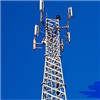
control centers to cell phone transmission towers, the instances of catastrophic damage to these and other
services we have all come to take for granted has been greatly reduced. (Copied)