














FAQs
1. How about the cost performance of your product?
As a leading lightning enterprise in China, we have focused on providing lightning solution, technical innovation, product’s quality and after-sales service.
Compared to foreign brands, our products can be tested in any equal conditions with them and never lose in technical parameters. Especially in the aspect of signal protector series, we have stronger R&D capability and ability of matching the market, and more competitive price than them.
And compared to domestic brands, we have great advantages in R&D and after-sales service. From now on we have 7-8 sales offices in our country, which would be extended to over 20 in the next year. Our product has high quality while mid-range price, which is basically the same as the price of first-line brand, even lower than them for some products.
But we don’t want to compare with lightning products in Wenzhou and Seg market, Shenzhen, they are just like lightning protection devices.
2.How to evaluate a lightning protection enterprise?
Firstly, you should know whether it has testing ability and its own laboratory or not. Secondly, the corresponding product inspection reports, such as the test report of National Weather Service (type test), qualification recognition of Ministry of Industry and Information Technology of China, ISO9000 and CE, ROSH certification, etc. Besides, various certifications of industry requirement and quality-product liability insurance. It shows the company is good if it has all of these, but at present it’s only about ten enterprises in China that meet those requirements.
3. How to distinguish good or bad for the lightning protection devices in the market just look the same?
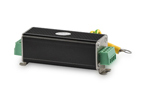
Take this power module for example, it may look like Wenzhou’s, but there are much more differences between them.
1) Shell. We adopt PC plus Plumbum with anti-flaming, grade V0, and enduring high temperature, 220 degree centigrade. Maybe you have no idea about grade V0, put it simply, it must be burned if we cut off a piece and put it on the alcohol lamp, and when we take it slowly away from the lamp, counting 1, 2, 3, then it will out, that is grade V0. While what Wenzhou’s used is ordinary plastic product which can be burned at the temperature less than 150 degree centigrade. Just in this aspect, our cost is several times higher than theirs.
2) Internal connector. We use copper to connect while they use steel, which is huge different in price.
3) Potting materials. We use imported silica gel material with the effect of anti-flaming and heat insulation. Mentioned heat insulation, for Metal Oxide Varistor’s (MOV) failure mode is short circuit and it will heat, what we should do is to pass the heat to the low-temperature joint quickly, letting the joint release, which we call trip, thus cut off line and neutral. While some of them have no potting, some just use cement.
4) Low temperature welding. We use lead-free solder at low temperature 145 degree while they use ordinary solder at 260 degree, which is three times cheaper than ours. You can have a test: it must be melted under a constant temperature soldering iron at 150 degree, then what would happen if we transfer to 265 degree? Please don’t dismiss the one hundred temperatures, it wins us the tenths of second which make a big difference between trip and fire.
5)Case temperature. Our case temperature is 220 degree and welding temperature is 145 degree, while their case temperature is 150 and welding temperature is 260, which means their case will burn before the trip when the SPD become invalid.
6)MOV resistance. We adopt valve block at the size of 34*34, while many others’ is ?25 so that their lightning protection level can’t meet the requirement and the price is much lower than ours. Actually, safety is one of the most important thing of lightning protection, though there isn’t lightning protection effect, it can never do harm to the system, that’s why I said they just like lightning protection device.
4.Is full protection going to be too expensive?
Full protection is one of the most inexpensive insurance policies you can buy. The cost of system inavailability is far more expensive than proper protection. One major surge event in a ten-year period far outweighs the cost of protection.
5.We have good grounding, do we still need surge protection?
A good ground is important for surge protection devices (SPD) to work properly. AC power SPD’s are designed to divert surge current to ground by providing the least resistive path. Without surge protection on the AC power, the surge current will look for other paths to a good ground. In many cases this path is found through electric/electronic equipment. Once the dielectric strength of the components in electronic equipment has been surpassed large currents begin to flow through the sensitive electronics thus causing failure.
6. Our equipment is connected to a UPS, do we still need surge protection?
UPS systems play a very important part in an overall power protection plan. They are designed to provide good clean uninterruptible power to critical equipment. They provide no protection for the communication and control lines found in today’s network type environments. They also do not normally provide AC power protection to the many nodes connected within the network. The surge protection elements found within even a very large UPS is very small in comparison to stand-alone SPD’s. Normally around 25 to 40kA. In comparison, our smallest AC entrance protector is 70kA and our largest is 600kA.
7. We’ve never had any problems with surges, why do we need surge protection?
There are not many areas of the world today that do not experience surge-related incidents. Lightning is only one of the many causes of transient surge related problems. Today’s modern electronic equipment is much smaller, much faster, and much more susceptible to transient related problems than was the last generation of equipment. The sheer number of control and communication devices interlinked together in today’s networks make their susceptibility many times greater. These are new problems that were not nearly as frequent with previous generations of control equipment.
8. All my data lines run inside the building, why do I need to protect them?
Even though all data lines stay within the building, communication interfaces are still susceptible to damage. There are two reasons for this. 1. Induced voltages from a nearby lightning strike when control/communications lines run near electrical power wires, metal in the building structure, or near lightning rod ground leads. 2. Differences in AC power voltage references between two devices connected together by control/communication lines. When an event, such as a nearby lightning strike, migrates in on the AC power, individual equipment within the building can see large voltage reference differences. When these devices are connected together by low voltage control/communication lines, the control/communication lines try to equalize the difference, thus causing damage to the interface chips.
9. Why do I need to protect data/control lines?
Data and control interfaces suffer many times more damage from surges than do power supplies. Power supplies normally have some type of filtering and operate at higher voltages than do control or communication interfaces. Low voltage control and communication interfaces normally interface directly into the equipment through a driver or receiver chip. This chip normally has both a logic ground reference as well as the communication reference. Any substantial difference between these two references will damage the chip.
10.We are based in an area with very little lightning, why do we need surge protection?
Many areas of the world do not experience as much lightning related problems as others. As much as companies today depend on their control and network systems, the system availability has become paramount. For most companies, a single surge related incident in a ten-year period, which causes the loss of system availability, would more than pay for proper protection.
11.Why is your protection more expensive than others I have found?
The OPPLEI surge protection devices are actually medium priced. There are many more expensive devices on the market as well as the low cost commodity devices. If you look at the four main factors: Price, Packaging, Performance, and Safety, the OPPLEI product offering is the best in the industry. OPPLEI offers complete solution plans, from the AC power service entrance down to the individual equipment and all the control/communication lines in between.
12.The Phone Company has already protected the incoming phone lines, why do I need additional protection?
The protection the Phone Company provides is there mainly for personal safety to prevent lightning from migrating in on their wires and causing personal injury. It provides little protection for sensitive electronic communications equipment. It provides primary protection but does not eliminate the need for secondary protection at the equipment.
13. Does SPD really work to protect equipments?
About lightning protection effect, firstly it depends on whether the grounding meets the requirements, secondly choosing the suitable SPD with high quality.
Here is an example. We installed more than 300 spots in a village Shajing, Shenzhen in 2007, while none in the village next door. After a rainy season, nearly 80% cameras in the latter were destroyed and turned out to be no images, but in the former, only 12 SPDs were destroyed and repaired, and SPD and camera both ruined only one.
14. What should we do if we did grounding and installed SPD with famous brand, but our equipment still are ruined?
Generally, it’s unlikely to happen. You know, grounding is a significant link and costs much more than SPD. It shows that your company attaches great important to lightning protection if you can do well with grounding. As to the brand, I’m sure it can’t be blamed to the quality of SPD if you purchase directly from manufacturer, for this kind of product is relatively mature, and we also dare not to say how much better than them. For all major brands including OPPLEI have many fake products, we can’t make sure the products come from original factory if you buy from agent.
15.Common antenna connector impendance:
Connector
Name
Impendance
Remark
N
L16
50/75
Base station, GPS: 50Ω
DIN
L29、7/16
50
Base station, GPS: 50Ω
UHF
SL16
50
Apply for less than 500MHz
BNC
Q9
50/75
GPS adopts 50Ω and others adopt 75Ω
TNC
L9
50/75
Base station adopts 50Ω and others adopt 75Ω
SMA/SMB
50/75
Base station adopts 50Ω and others adopt 75Ω
F
75
Include metric and English system, apply for cable TV
16. How to select SPDs for Data, Signaling & Control Circuits?
Knowing where to install surge protection can be difficult. To ensure cost-effective
protection is provided for data, signaling and control circuits, two issues need to be considered:
? Where should the SPD(s) be installed?
? What type of SPD is appropriate for each circuit type and location?
17. Where should the SPD(s) be installed?
Communications devices are at risk from transients being induced onto the signal lines interconnecting these devices.The use of surge protection barriers, installed at either end of the lines, provides cost effective mitigation. The highest risk is posed by communication or signal lines that enter/exit the building. In such circumstances, protection devices should be installed at the point-of-entry or at the equipment termination itself. Internal wiring which extends more than 30-50’ should also be protected. Twisting and/or shielding of cables provides a level of protection, however this should not be regarded as sufficient for the sensitive inter-faces that characterize today’s communication devices.